
KET Preparation Guide for Parents: What to Know Before Your Child Takes A2 Key
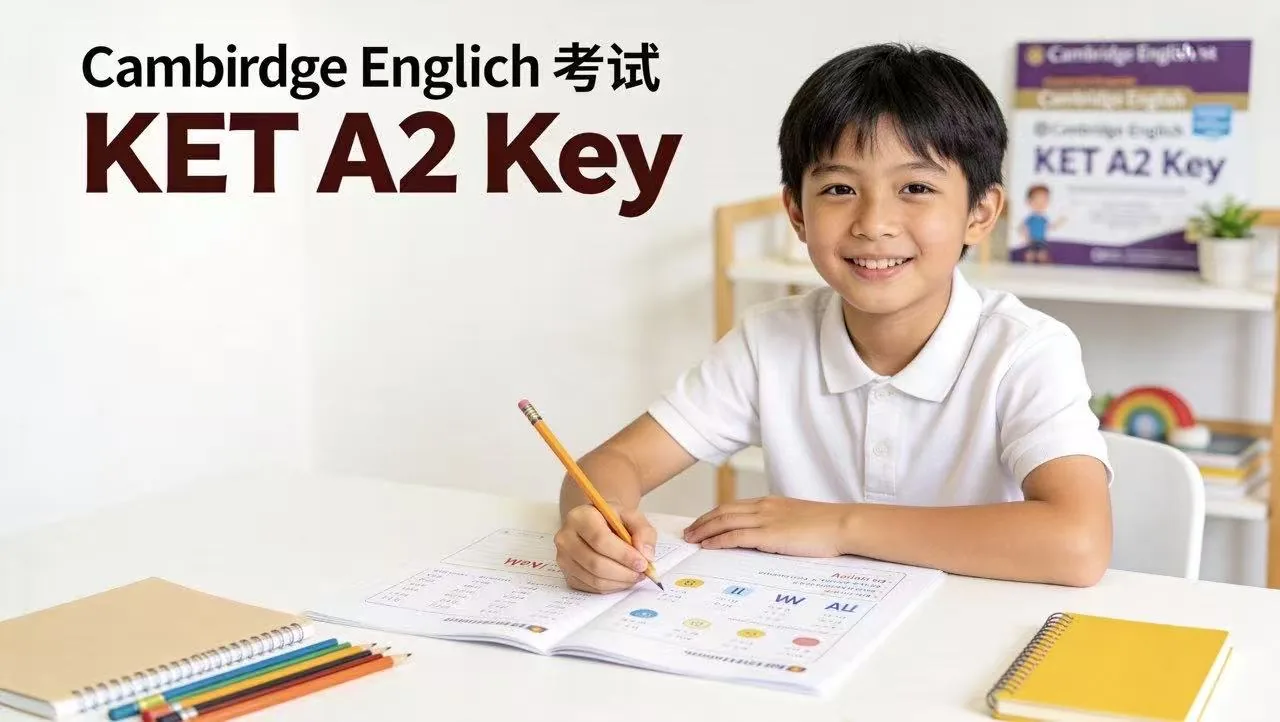
A practical A2 Key (KET) preparation guide for parents planning their child’s first Cambridge English exam.
KET preparation is not just about helping a child collect another English certificate. The Cambridge A2 Key exam, also known as KET, is a useful checkpoint that shows whether a young learner can understand and use basic English in real-life situations.
For many families, KET is the first international English exam on a child’s learning path. It can help parents understand their child’s current level, set a clear study goal, and build confidence before moving on to higher exams such as B1 Preliminary (PET).
If you are wondering whether your child is ready for KET, how long preparation should take, which materials to use, and what common mistakes to avoid, this guide will walk you through the essentials.
What Is KET / A2 Key?
KET is the older name for A2 Key, a Cambridge English qualification at CEFR A2 level. For school-age learners, the exam is usually taken as A2 Key for Schools, which uses topics that are more familiar to children and teenagers, such as school, family, hobbies, friends, travel, and everyday routines.
The exam tests whether a learner can:
- Understand simple written and spoken English
- Use basic grammar and vocabulary accurately
- Write short messages, emails, and simple texts
- Answer questions and communicate in everyday situations
In other words, A2 Key is not only a vocabulary test. It measures whether a child can actually use English across reading, writing, listening, and speaking.
What Age or Grade Is Suitable for KET?
Many students begin KET preparation around ages 8 to 12, often from Grade 3 to Grade 6. However, age is only a rough reference. A child’s readiness depends much more on their actual English ability.
A child may be ready to start KET preparation if they can:
- Read short English texts of around 80–120 words with reasonable understanding
- Understand simple conversations about daily life
- Write short sentences or a simple message
- Answer basic personal questions in English
- Talk briefly about hobbies, school, family, and daily routines
If a child still struggles with phonics, basic sentence structure, or speaking confidently, it is better to strengthen their foundation first instead of rushing into exam practice.

What Does the KET Exam Test?
A2 Key for Schools assesses three papers: Reading and Writing, Listening, and Speaking. Together, these papers test all four language skills.
1. Reading and Writing
This paper usually takes about 60 minutes. Students may need to read notices, messages, short articles, emails, and simple stories. They also need to complete short writing tasks such as a message or a short text based on prompts.
This section often reveals whether a child can understand English in context. Some students know many words but lose marks because they cannot connect meaning across a sentence or paragraph.
2. Listening
The listening paper takes about 30 minutes. Topics are usually practical and familiar, such as school activities, shopping, food, travel, hobbies, times, places, prices, and people.
Success in listening depends on more than recognizing words. Children need to catch key information, especially numbers, dates, names, locations, and changes in meaning.
3. Speaking
The speaking test usually takes around 8–10 minutes and is often done with two candidates together. Students answer personal questions, describe simple information, and interact with another candidate.
For many Chinese and Asian learners, speaking is the easiest section to neglect. Children do not need to sound like native speakers, but they do need to speak clearly, answer naturally, and understand the examiner’s questions.
Which Materials Are Best for KET Preparation?
Parents do not need to buy every workbook available. A better approach is to choose one main coursebook and one official practice or exam-style book.
For Systematic Learning
If your child needs a clear learning path, books such as Complete Key for Schools or Compact Key for Schools can help build vocabulary, grammar, reading, listening, writing, and speaking skills step by step.
For Exam Practice
If your child already has a solid foundation and plans to take the exam within three to six months, materials such as A2 Key for Schools Trainer and official Cambridge practice tests are useful for understanding question types, timing, and exam strategy.
For Long-Term Ability Building
For younger learners or students who are not ready for exam pressure, graded readers, topic-based speaking lessons, listening practice, and regular reading are often more valuable before moving into formal KET preparation.
A healthy preparation path is: foundation building, then question-type training, then mock tests, then final revision.
Common KET Preparation Mistakes
Mistake 1: Only Memorizing Vocabulary
Vocabulary matters, but KET tests whether children can use words in context. Words should be learned through sentences, stories, conversations, and writing tasks.
Mistake 2: Doing Too Many Practice Tests Too Early
Practice tests can show problems, but they do not automatically fix them. If a child has weak grammar, slow reading speed, poor listening habits, or limited speaking fluency, those skills need targeted practice.
Mistake 3: Ignoring Speaking
Some families leave speaking practice until the last few weeks. This often leads to nervous, memorized, or incomplete answers. Speaking needs regular interaction and real practice over time.
Mistake 4: Confusing A2 Key and A2 Key for Schools
Children usually do better with A2 Key for Schools because the topics are more suitable for young learners. The standard A2 Key version is more adult-oriented.
Mistake 5: Taking the Exam Too Early
KET should build confidence, not damage it. If a child is pushed into the exam before they are ready, English may start to feel stressful rather than rewarding.
How Long Should KET Preparation Take?
The right timeline depends on the child’s current level:
- Strong foundation: 3–4 months of focused preparation may be enough
- Average foundation: around 6 months is usually more realistic
- Weak foundation: 9–12 months may be needed, including foundation building before exam practice
For many children, two to three high-quality English sessions per week, combined with regular reading, listening, and speaking practice, creates a steady and healthy preparation rhythm.
When and Where Can Children Take KET?
A2 Key exam dates vary by country, city, exam center, and format. Some locations offer paper-based exams, while others may offer computer-based or digital formats.
Parents should check authorized Cambridge English exam centers or local partner schools for the latest dates and registration information. It is wise to look for available exam seats at least two to three months in advance, especially during popular testing periods.
What Kind of Student Is More Likely to Pass KET Confidently?
Students who perform well in KET usually share a few habits:
- They read and listen to English regularly, not only before the exam
- They review mistakes instead of only checking scores
- They practice speaking before the final month
- They learn vocabulary in real contexts
- They follow a study plan that matches their current level
The real value of KET is not just the certificate. It helps children move from “studying English” to actually using English.
Final Advice for Parents
If your child is preparing for KET, start with a level check. Then build a realistic three-to-six-month plan that includes reading, listening, vocabulary, writing, and speaking. Use official materials wisely, but do not rely only on test papers.
Most importantly, keep the goal clear: KET should help your child gain confidence and develop practical English ability. With the right preparation path, A2 Key can become a positive milestone in your child’s English learning journey.
If you would like a personalized KET preparation plan for your child, Expat Teaching can help assess their current level and match them with experienced English tutors for one-on-one support.